
All About Essential Oils
What are essential oils?
Essential oils are a highly concentrated version of the natural oils in plants.
A true essential oil is the volatile (readily vaporised) liquid component of aromatic plants and trees. They occur in different parts of the plant depending on the species of plant; leaves, flowers, seeds, bark, rind etc. These precious essences are commonly collected by a process of steam distillation of the plant material. Expression (pressing) of the fruit’s rind is the method that is used for citrus oils and certain fragile scented flower oils must be solvent extracted essential oils cannot be certified as organic as a result of the chemical solvents (such as petroleum and hexane) that are used during the extraction process.
Our therapeutic grade essential oils are either produced on our farm or sourced from other certified organic distillers. By knowing the exact source of our oils, we can be confident that they are 100% pure, certified organic and unadulterated.
We distil our own essential oils on site, on the farm, to ensure that the fresh plant material retains a high level of its natural aromatic oils. Our modern distillation facility is constructed of food grade stainless steel. This helps prevent contamination and ensures the volatile organic essential oils maintain their therapeutic qualities by not reacting with the distillation equipment itself. We package our essential oils and aromatherapy products in amber glass bottles to protect them from UV light, which can degrade the oils.
Selecting Essential Oils
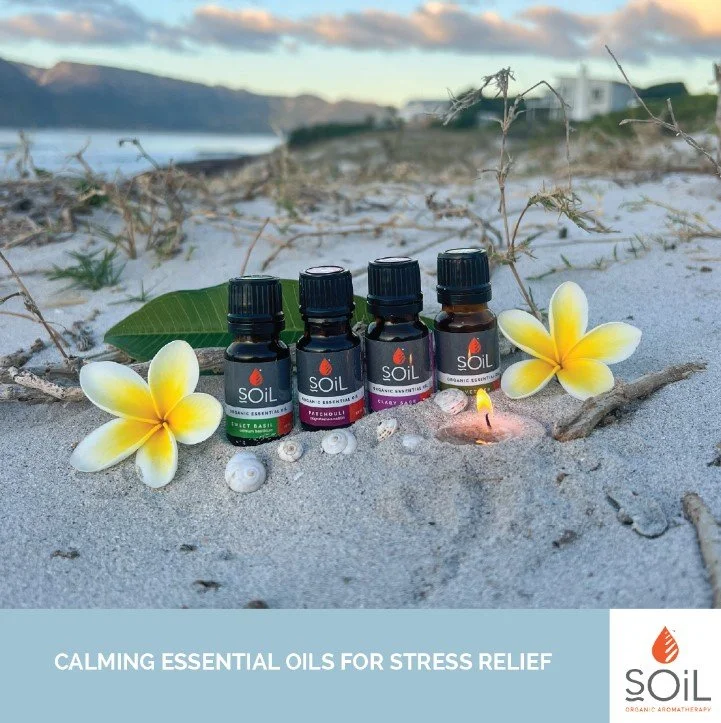
There are many producers of essential oils worldwide and many synthetic aromatic oils, posing as essential oils. The word Lavender, when written on a product label, can mean a smell or a colour. The scent of lavender can be recreated in a laboratory and it is this synthetic lavender smell that is used in perfumery and many commercial skin care and household products. The scent may be similar but the oil does not contain the therapeutic properties that the species lavender (Lavandula angustifolia) contains. This is why we always write the plant species on our essential oil bottles. When we grow a species for its oil or select an essential oil from a distiller, we look at many aspects of the oil to ensure its quality and adherence to international standards in therapeutic grade essential oils.
Bio-type
An essential oil must come from a defined botanical species as well as a particular genetic strain, e.g. M. alternifolia.
Chemo-type
The same botanical species can often produce completely different chemical constituents in its essential oil. For example, there are 6 different chemotypes of Thymus vulgaris. The two most common chemotypes, c.t.Thymol, are located close to the Mediterranean sea at low altitude, whereas Thymus vulgaris c.t. linalool, prefers the sun and south exposed slopes. C.t. Thymol (the chemo-type we sell) has excellent bronchopulmonary properties and is ideal for treating colds, coughs, sore throats, bronchitis, whooping cough and asthma.
Geo-type
As a result of environmental factors, sometimes a particular area will produce a superior quality of oil. The oil is then known by the area it comes from e.g. Rose Oil, Bulgarian.
Complete or Whole
The oil should be from a single distillation and should not be rectified (the distilling of an oil a second time to remove unwanted constituents). In some cases this is acceptable. E.g. Bergamot is rectified to remove its bergaptene and make it Non-phototoxic). We ensure that we indicate this on the product.
Analysis
We ensure all of our oils have been tested using gas chromatography to analyse its chemical constituents. This way, we can ensure that an oil conforms to the agreed international standards in therapeutic grade essential oils.
Find the right oil for you
Use our Wellness guide to match your symptoms to the ideal essential oil.
Benefits Of Aromatherapy
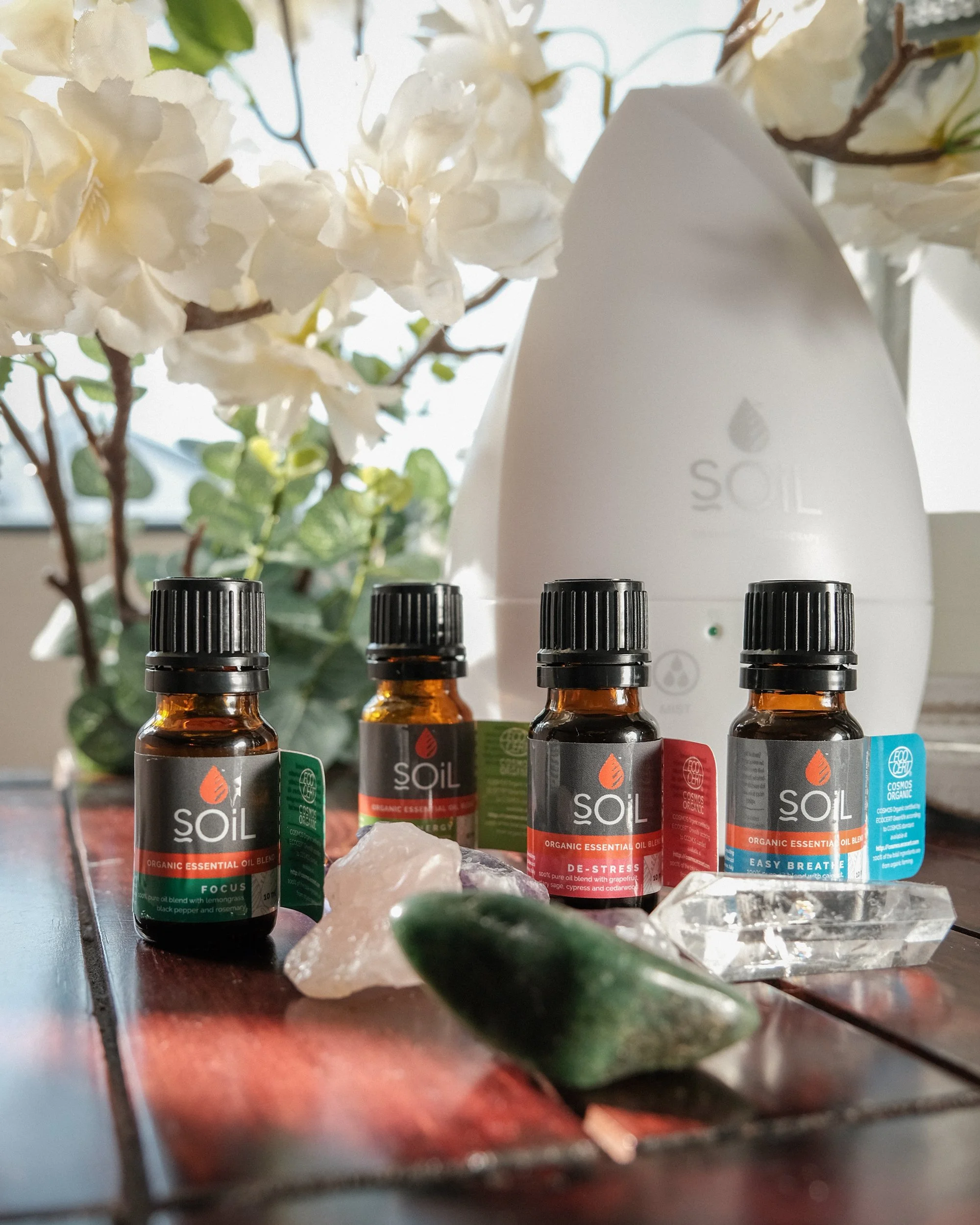
In life we sometimes forget to take time for ourselves. At SOiL we give you the best quality essential oils. Take time back with all the benefits of essential oils and aromatherapy.
Pick yourself up
You can pick yourself up with an uplifting blend, or relax and unwind the mind and give yourself time to chill. Essential oils have 100% plant power to support and reassure you. Pure natural and very effective.
Essential oils have stood the test of time
Essential oils have been around since ancient civilisations, from ancient Egypt to treasures from Indian & Africa. These built some of the strongest trade routes over the ancient world. Essential oils have stood the test of time. In modern life the benefits remain the same - to enrich your life, support you and revive you when you need it. Let SOiL essential oils de-stress and relax you. Take the time just for you.
Body and Mind
For the body, the benefits of essential oils include sensations on the skin that are warming, cooling, hydrating, invigorating, healing, refreshing or relaxing. While for the mind, the pure fragrances of essential oils also promote a sense of wellbeing. Each aroma has its own unique ability to affect mood and essential oils can be used to reduce stress, harmonise, centre, calm or energise our minds.
How To Use Essential Oils
Essential oils are the highly concentrated active ingredients of plants. They should always be diluted in a base before use and should not be taken internally without professional recommendation.
Baths
Add Add 5 – 10 drops of essential oil(s) to a warm run bath. If skin is sensitive, blend the essential oil in a teaspoon of carrier oil first. Close the door so the vapours don’t escape. Soak for at least 10 minutes relaxing and breathing deeply. For added moisturising dilute the oils in 10ml of carrier before adding to the bath.
Massage
Add 5 – 6 drops of essential oil per 10ml of carrier oil. Mix thoroughly and apply liberally to the skin.
Inhalations
Add 4 - 5 drops of essential oil to a bowl of steaming water. Place a towel over your head, close your eyes and lean over the bowl. Inhale the vapour for a few minutes.
Burners & Diffusers
Fill the bowl of the burner/vaporiser with water and then add 3 – 6 drops of essential oil. Light the candle and the oil will evaporate as the water heats up. Do not let the bowl dry out.
Compress
Recommended when the area is too painful to massage. Dip a towel or cloth in 4-5 drops of essential oil and 200ml hot or hold water and wring out. Cover the affected area with this compress. Then place a plastic wrap over this and a towel or blanket on top. Leave the compress on for 2-4 hours