Wellness Guides
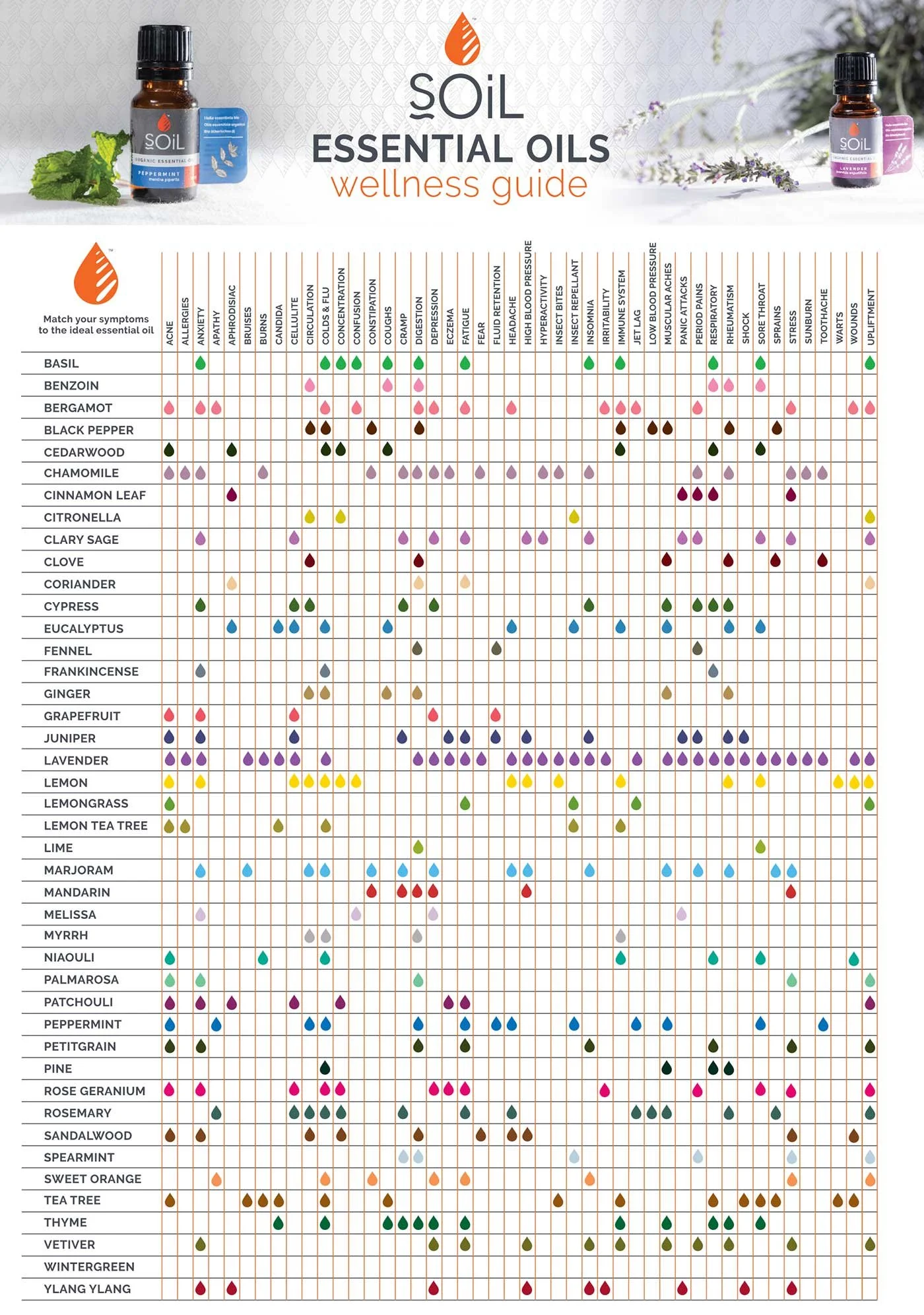
Explore Essential Oils for Everyday Support
Our easy-to-use chart highlights the traditional uses and aromatic profiles of each organic essential oil, helping you to choose oils that align with your mood or lifestyle preferences. Whether you are looking to create a calming atmosphere, boost focus or support emotional balance, our aromatherapy products offer a natural way to enhance your daily routine.
Note: Essential oils should be used safely and with appropriate education. Always follow recommended dilution guidelines and consult a qualified professional when needed. SOiL makes no medical claims: this information is provided for general wellness guidance only.
Educational Charts
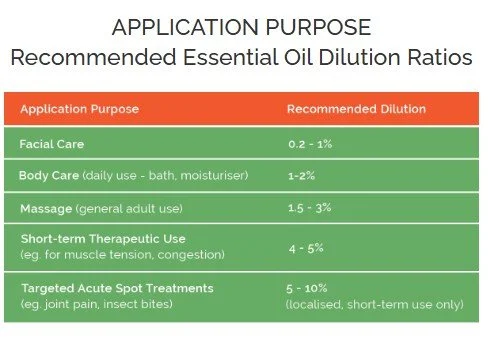
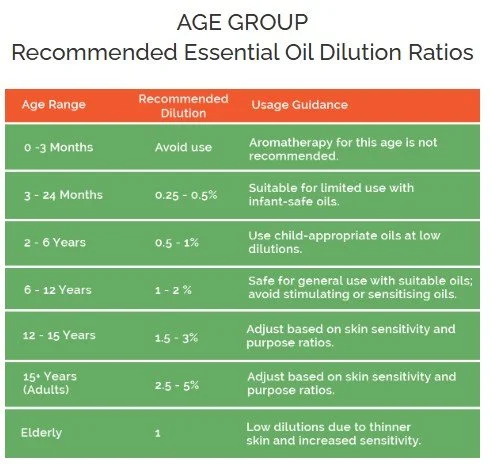
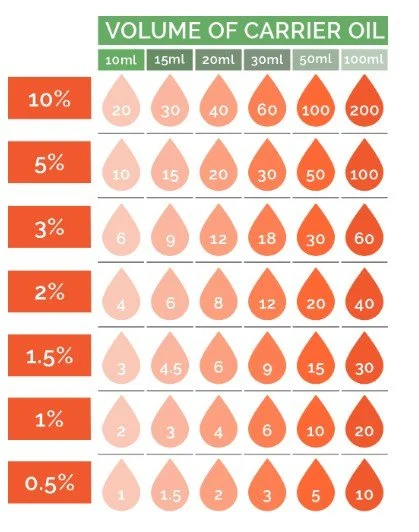
How to Safely Dilute Essential Oils for Topical Use
Our easy-to-follow charts will guide you in properly diluting essential oils for safe and effective topical application. Whether you're just starting out with aromatherapy or you're an experienced user, this guide provides clear and straightforward recommendations to help you blend with confidence.
Please note: These dilution ratios are intended for individuals in general good health. If you are pregnant, breastfeeding, elderly, managing a medical condition, or using essential oils for children or infants, we strongly advise consulting with a qualified aromatherapist or healthcare professional for personalised guidance.
Certain essential oils are not safe for young children or infants, even in low dilutions, so it’s crucial to research each oil carefully before use. Remember, essential oils are potent and should always be diluted before applying to the skin.