
About Jojoba Oil
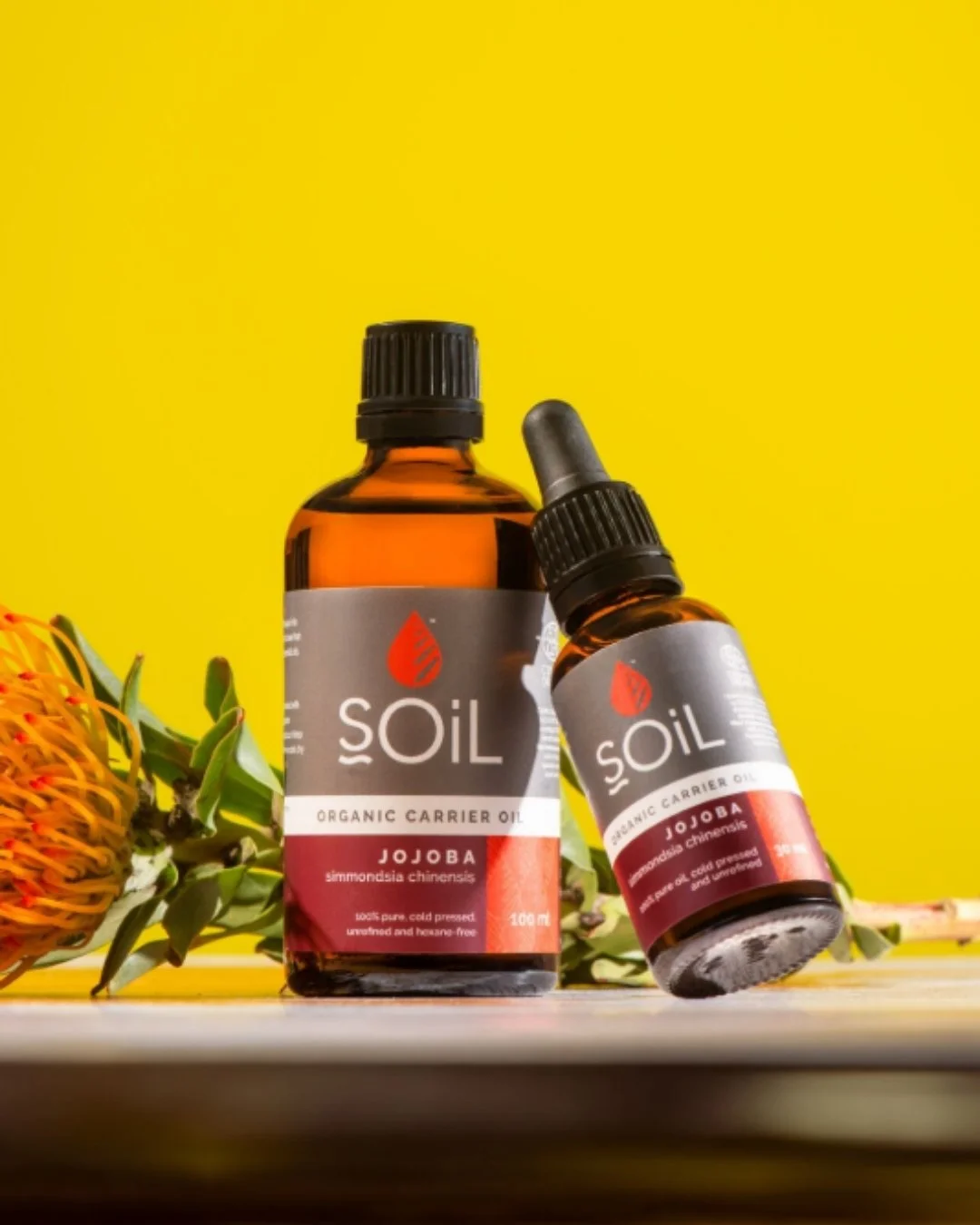
Every essential oil needs a worthy companion—a carrier that honours delicate botanical aromas while helping active plant chemistry safely absorb into the skin. Enter Jojoba Oil: the absolute crown jewel of aromatherapeutic carrier oils.
While it has earned a massive reputation in green beauty circles, jojoba holds a special place in the aromatherapist’s toolkit. It’s gentle, deeply restorative, and structurally unique, making it the ideal base for everything from custom perfume rollers to grounding body blends.
Here are ten essential facts about jojoba—the ingredient, the hardy desert shrub behind it, and why it belongs at the heart of your aromatherapy practice.
10 Facts About Jojoba Carrier Oil
1. It Features an Unbeatable Shelf Life
Triglyceride oils (like Sweet Almond or Evening Primrose) can oxidize and go rancid within months. Because jojoba is a liquid wax ester, it naturally resists oxidation. A pure bottle will stay fresh for years, protecting the shelf life of the precious essential oils you blend into it.
2. It Nurtures Hair and Scalp
Beyond facial care, jojoba shines in hair rituals. Massaged into the scalp, it softens dry flaking and hydrates hair follicles; smoothed lightly through the ends, it locks in moisture, tames flyaways, and creates shine without the weight of heavier botanical oils.
3. It Helps Balance Oily and Acne-Prone Skin
It feels counterintuitive to apply a wax or oil to slick skin, but jojoba works in harmony with your body’s natural rhythm. Because it mimics natural sebum, applying it can signal to your skin that it has produced enough oil, helping to balance sebum production naturally over time.
4. It Accommodates Every Skin Type
Dry, oily, combination, or reactive—jojoba’s gentle nature makes it a safe bet across the board. Just as importantly for aromatherapists, it has an almost imperceptible, extremely soft nutty scent. It will never compete with, overpower, or distort the delicate top notes of your favorite essential oils.
5. It Comes From Simmondsia Chinensis
Native to the harsh, arid deserts of North America, the Simmondsia chinensis shrub survives extreme conditions by storing energy reserves in its seeds as liquid wax. This evolutionary trait gives the extracted liquid its remarkable stability and resilience.
6. Versatility in the Aromatherapy Studio
Jojoba is one of the most adaptable carriers in holistic wellness. Consider using it as:
An Essential Oil Carrier: The perfect 2% dilution base for topical aromatherapy, massage blends, or custom roll-on perfumes.
A Daily Facial Serum: Layered under moisturiser or enriched with Rose Geranium or Frankincense essential oils.
A Nourishing Cuticle & Hand Treatment: Rubbed into nail beds to restore dry, cracked skin.
A Scalp Pre-Wash: Infused with Rosemary or Cedarwood essential oils for a circulation-stimulating head massage.
A Natural Beard Oil: Condition facial hair and soothe the skin underneath without clogging pores.
7. It Is Exceptionally Low-Comedogenic
With a low comedogenic rating, jojoba is virtually non-pore-clogging. It functions beautifully as a lightweight facial serum, a soothing cleanse-and-clear makeup remover, or a neutral base for acne-clearing essential oil blends like Tea Tree and Lavender.
8. It’s Not Actually an Oil
This is the ultimate plant trivia: Jojoba (pronounced ho-HO-ba) is technically a liquid wax ester, not a traditional triglyceride vegetable oil. This molecular distinction is its superpower—it feels lighter, resists oxidation, and absorbs cleanly into the skin without leaving a heavy, greasy film.
9. Sourcing and Purity Matter
To get the full therapeutic benefit, quality is non-negotiable. Look for jojoba that is 100% pure, cold-pressed, unrefined, and certified organic. Ethical certifications like Fair for Life guarantee fair treatment and fair wages for the agricultural workers cultivating the crop. Always ensure your oil is housed in an amber or dark glass bottle to shield it from light degradation.
10. It’s the Ultimate Match for Human Sebum
Jojoba’s molecular structure closely mirrors human sebum—the natural oil produced by your skin. Because your skin recognises its chemical composition, it absorbs jojoba effortlessly, making it an ideal vehicle to deliver essential oils deep into the epidermis without surface congestion.
Frequently Asked Questions
Is jojoba oil safe for sensitive skin?
Yes. Its structure mirrors human sebum, making it one of the most biocompatible carriers available. However, because skin chemistry varies individually, we always recommend patch-testing a small area first.
Can I use jojoba oil as a base for oil-based perfumes?
It is arguably the best base for botanical perfume oil rollers. Because it doesn't turn rancid quickly and features a neutral scent profile, your essential oil top, middle, and base notes will smell true and last significantly longer.
Does jojoba oil solidify in cold weather?
Because it is a liquid wax, jojoba will naturally cloud or solidify if exposed to temperatures below 50°F (10°C). This is a sign of purity! Simply let the bottle return to room temperature, and it will return to its golden liquid state without any loss of quality.
How should I store my jojoba carrier blends?
Keep your blends in dark amber glass bottles, tucked away in a cool spot out of direct sunlight. While jojoba itself is highly stable, shielding your essential oil dilutions from heat and light protects the delicate aromatics inside.
A Note on Color: True, unrefined jojoba retains its natural golden hue along with its native vitamin E and antioxidant content. Completely clear jojoba has been bleached and deodorised, stripping away beneficial botanical compounds.
Whether you’re crafting a soothing facial serum, a scalp treatment, or a signature natural perfume, jojoba oil provides the perfect balance of stability, absorbency, and skin compatibility.
Disclaimer
Please note that All SOiL essential oils are intended for external use only. Unless otherwise advised by a medical practitioner. Do not use undiluted on skin. Do not apply to broken or irritated skin. If sensitivity occurs discontinue use. If you are pregnant, breastfeeding, taking any medications or under medical supervision seek professional advice before use. Please keep out of reach of children.
SOiL advocates the responsible use of essential oils. We grow and source the finest quality essential oils from around the world to supply you with pure, potent plant extracts for aromatic and therapeutic applications. Essential oils are many times stronger than the plants they are derived from and are far more concentrated than the herbal tincture extracted from the same plant.
Accordingly, we recommend that you avoid oral use/ingesting pure essential oils without seeking professional advice beforehand. The issue is not the quality of the essential oils you take orally – there is no such thing as a ‘therapeutic grade’ of essential oil nor is one brand of essential oils safe to ingest over another brand. The issue is safety and even though essential oils are 100% natural, plant-derived extracts, they are botanical medicines which have the potential to cause harmful side effects when taken orally. Essential oils should only be prescribed for oral use in a clinical setting, by a suitably qualified practitioner.
There are many methods of obtaining the aromatic and therapeutic benefits of essential oils, namely; inhalation, massage, skincare preparations, bath and compress. If you require individual advice on oral use/ingestion or in relation to a specific medical condition, we recommend you consult a qualified practitioner, as described above.